2020/03/16

開催告知:【オンライン開催!】第11回GIS-Landslide研究集会および第7回高精細地形情報シンポジウム

延期を表明しておりました第11回GIS-Landslide研究集会(11th GLM)および第7回高精細地形情報シンポジウム(7th HDTS)を、Zoomを利用したオンラインミーティングで開催することにいたしました。
新規の発表についても募集いたしますので、ぜひご検討願います。

主催:GIS-Landslide研究会、地形鮮明化プロジェクト
日時:2020(令和2)年4月21日(火)13:00-17:00
場所:お好きな場所からご参加ください(オンライン開催)
11th GLM テーマ1:令和元年の台風災害
11th GLM テーマ2:斜面傾斜量の評価手法(地形種の分類などにあたって)
7th HDTS テーマ:10年後の高精細地形情報
発表申し込み締め切り:2020(令和2)年4月5日(月)
発表申し込み先:防災科研 内山(uchiyamaあっとbosai.go.jp)までメールでお申し込みください

※GIS-Landslide研究会HP
https://gis-landslide.blogspot.com/2020/01/11gis-landslide.html

岩波書店『科学』リレーエッセイ2020年3月号 「地球を俯瞰する自然地理学 身近な景観を俯瞰する」

本プロジェクトの早川が、岩波書店『科学』3月号に寄稿いたしました。
「地球を俯瞰する自然地理学 身近な景観を俯瞰する」をテーマに、UAVの自然地理的活用や考古・アートと連動した「俯瞰」方法について述べられています。

↓目次はこちら↓

2020/03/13

新着論文:積雪深計測におけるRTK-UAVの有効性

本プロジェクトの小花和さんの論文が、「地形」に採択されました。
Phantom4 RTKを用いてGCPsを用いずに積雪深分布を推定し、地上における実測値と比較して正確性を検証しました。本文PDFを公開しております。

小花和宏之・坂上清一・八木隆徳(2020)積雪深計測におけるRTK-UAVの有効性. 地形 41-1, 15-26.
 PDF (3.9 MB)


2020/02/14

開催報告:横浜市立千秀小学校 田谷周辺における被災状況地形模型の制作

2020年2月14日(金)、本プロジェクトの早川と小倉が、横浜市立千秀小学校6年生の総合的な学習の時間にて、地域防災に関する授業に参画しました。
横浜市立千秀小学校・田谷の洞窟保存実行委員会による環境教育の実践は今年度で3年目。今年度は、1年目に制作した田谷地域の大型地形模型に、昨年甚大な被害をもたらした台風15号・台風19号の被災状況をマッピングするという取り組みです。
※今年度のこれまでの取り組みは田谷の洞窟保存実行委員会HPにて詳しくまとめられています。

授業は図工室で実施。クラスを4班に分けて、担当した地域の被災状況を調べました。
この時間以前に、横浜国立大学の守田正志准教授と研究室の院生・学生らが、模型製作にかかわる授業を行っておりました。

児童たちは、まず台風が通り過ぎた後の地域の様子について聞き取りや現地観察を行い、地域で起こった小さな変化についてまとめました。
ex. 植木鉢が倒れた、浸水した、風邪で信号が傾いた など…

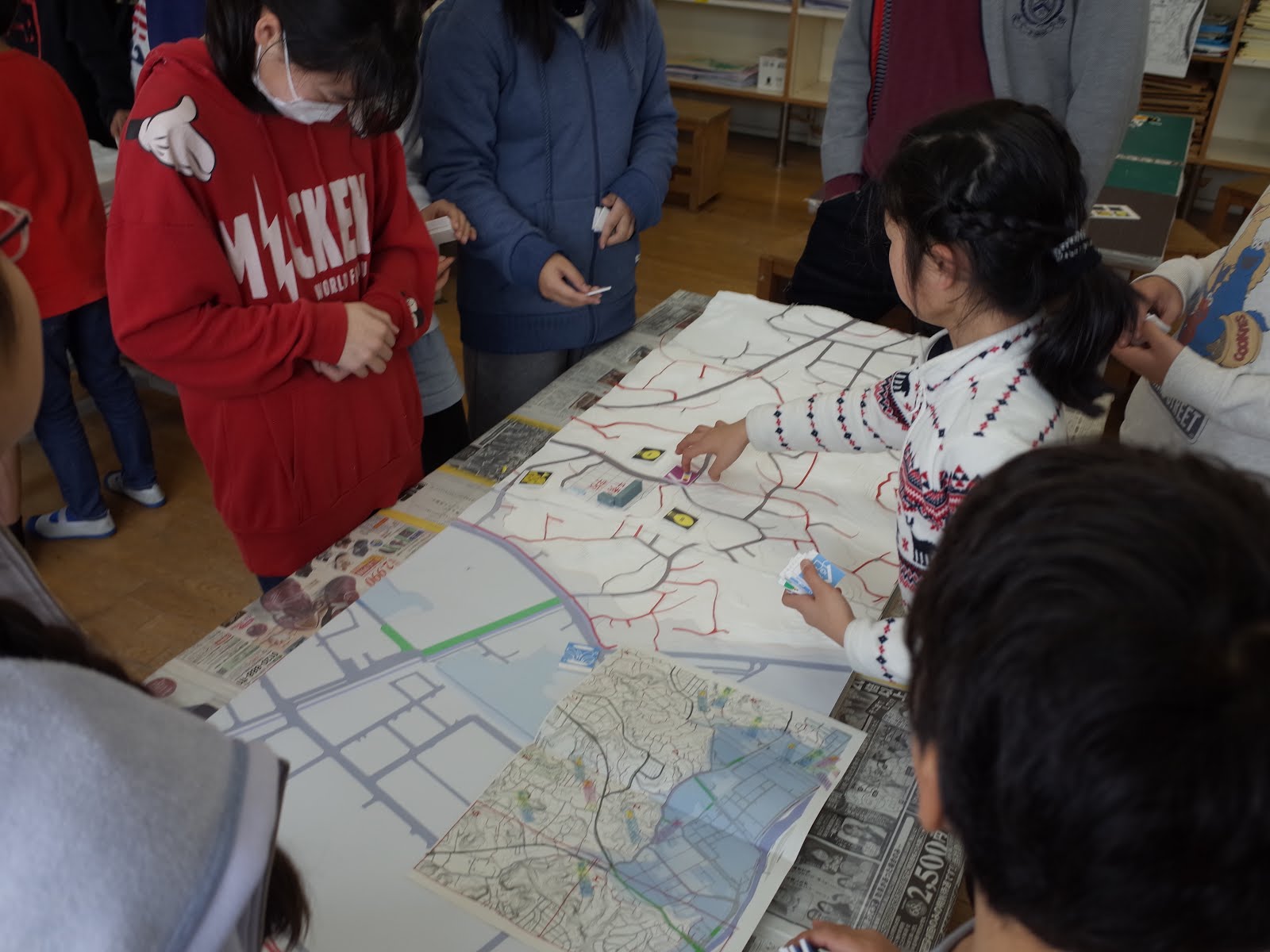
その上で、その現象が発生した場所について地図と地形模型を見比べながら、地形模型にマッピングしていきます。

模型の上の道やピクトグラムは児童らが作成し、貼り付けました。
また、低地には横浜市栄区のハザードマップから浸水予想エリアを抽出し、貼り付けました。

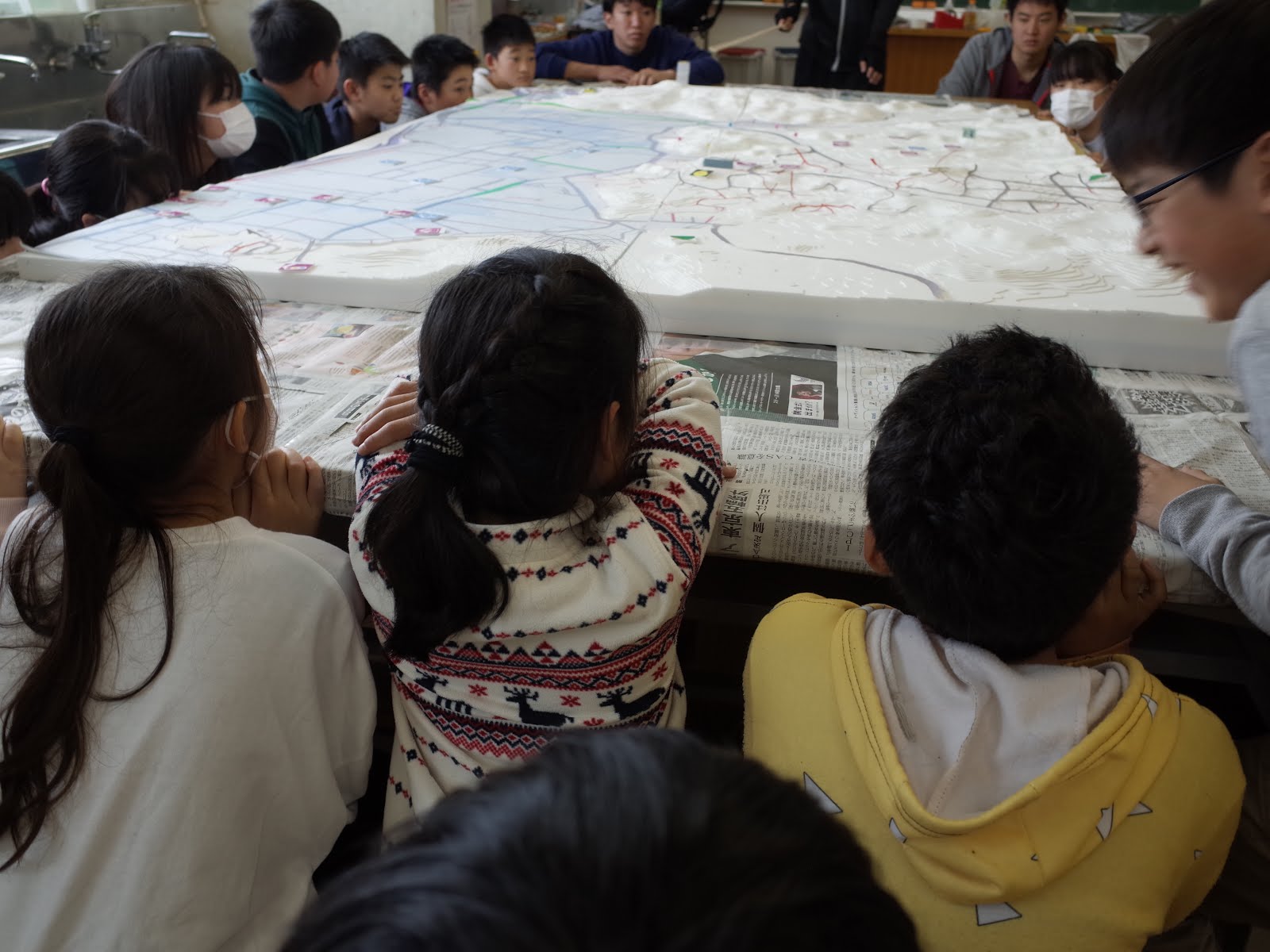
できた模型がこちら!!

この模型から、防災・減災について考えていきます。

児童たちは、上から見たり、横から見たり…
ピクトグラムと地形との関係などを考えていきます。

授業では、本プロジェクトの早川・小倉と、守田先生、田谷の洞窟保存実行委員会の田村裕彦さんを交えて、田谷地域で発災した箇所の特徴に関する考察を行いました。

浸水被害が大きい場所は、どんな地形であったのか?
風の被害が大きいのはどのような特徴があるのか?
山のかたちが違うのはなぜなのだろうか?
また、それぞれの土地利用はどのようなものであったのだろうか?

1時間かけてゆっくり議論し、模型製作のまとめとしました。

最後に、教室で給食をいただきました!
児童たちは授業以外では見られなかった先生方の素顔も見られたかも??
大盛況のうちに、ごちそうさまでした!の挨拶を終えて、次の授業の準備です。


参考URL

2020/01/29

JpGU-AGU Joint Meeting 2020 session "GEOSCIENTIFIC APPLICATIONS OF HIGH-DEFINITION TOPOGRAPHY AND GEOPHYSICAL DATA IN THE ANTHROPOCENE" / 日本地球惑星科学連合・米国地球物理学連合2020年合同大会国際セッション「人新世における高精細地形・地球物理データの活用」発表募集

例年5月に幕張で行われる日本地球惑星科学連合JpGUですが、今年、2020年はAGU(アメリカ地球物理学連合)との合同開催となります。すでにアブストラクト投稿が始まっておりますが、本年も、高精細地形地物情報に関するセッションを開催します。口頭発表はJpGU期間中の日曜日午前(2020/5/24 AM1)、ポスター発表は同日午後(PM3)となる予定です。地球人間圏科学(H)を母体とした、領域外・複数領域(M)セクションからの開催となります。今年は人間活動との相関にも着目し、「人新世(the Anthropocene)」における高精細データの利活用を探ります。高精細地形・地物情報のテクニカルな面から応用的な面まで、幅広いテーマでの研究発表をお待ちしています。

Here is the call for abstracts for our session M-TT49 GEOSCIENTIFIC APPLICATIONS OF HIGH-DEFINITION TOPOGRAPHY AND GEOPHYSICAL DATA IN THE ANTHROPOCENE at the next JpGU-AGU Joint Meeting in May 2020 (oral will be on Sunday morning, posters will be on Sunday afternoon). The abstract submission is now open, ending on February 18. Here we emphasize "the Anthropocene" as the session theme. Your cutting-edge research presentations are welcome regarding the applications of high-definition topographic and geophysical data, focusing on, but not limited to, the human-nature interactions. Reports on cutting-edge measurement applications are also welcome. Our session is based on Human Geosciences (H) section and will be provided in Multidisciplinary and Interdisciplinary (M) section.


M-TT49
GEOSCIENTIFIC APPLICATIONS OF HIGH-DEFINITION TOPOGRAPHY AND GEOPHYSICAL DATA IN THE ANTHROPOCENE

session details: http://www.jpgu.org/meeting_j2020/sessionlist_jp/detail/M-TT49.html
planned on May 24 (Sun) morning (AM1) and afternoon (PM3)

session description:
Recent technical developments have enabled us to acquire high-definition topographic and geophysical data for geoscientific research, including land surface processes, subsurface structures, submarine and aerial environments, and geo-ecological interactions. Such high-definition or high-resolution data are particularly useful for studies on relatively short-term, i.e., decadal to millennial time scales, and for future predictions using numerical modelings. In this session, we expect submissions on topics challenging the issues in the Anthropocene, the most recent geological era of the Earth considerably affected by human activities. A range of topics would fit the session framework, such as theoretical works, improvements in the data acquisition, extensive data preservation and archiving, pre- and post-processing, statistical analysis, physical modeling, and numerical simulation for any kind of geoscientific research in the Anthropocene. The methodological approaches may include, but not limited to, laser scanning, SfM-MVS photogrammetry, GNSS precise positioning, SAR interferometry, multi-beam sonar, ground-penetrating radar, geomagnetic and electromagnetic sensors, based on terrestrial (fixed or mobile) and aerial (UAV or manned airborne) platforms.

conveners:
Yuichi S. Hayakawa (Environmental Earth Science, Hokkaido University)
Shigekazu Kusumoto (Graduate School of Science and Engineering for Research, University of Toyama)
Christopher Gomez (Faculty of Maritime Sciences, Kobe University)

Abstract submission deadline: February 18 (Tue), 2020 (17:00 JST)
[ early-bird submission deadline with discount rates: February 4 (Tue), 2020 (23:59 JST) ]

submit your abstract at http://www.jpgu.org/meeting_e2020/

2019/12/16

受賞:CSIS DAYS 2019 優秀共同研究発表賞

本プロジェクトの齋藤さんと内山さんが、先日開催されたCSIS DAYS 2019にて、優秀協働研究発表賞を受賞しました。
この賞は、東京大学空間情報科学研究センターとの共同研究成果の発表の中から、特に優れたものを、各セッションから1件選出されたものです。
発表アブストラクトは、以下のURLをクリックしてご覧ください。

齋藤 仁・内山庄一郎 2019. 「多時期のドローン調査に基づく斜面崩壊地と植生回復モニタリング」.CSIS DAYS 2019


参考URL
・参考論文:Saito, H., Uchiyama, S., Hayakawa, Y.S., Obanawa, H., (2018) Landslides triggered by an earthquake and heavy rainfalls at Aso volcano, Japan, detected by UAS and SfM-MVS photogrammetry. Prog Earth Planet Sci 5, 15, doi:10.1186/s40645-018-0169-6
CSIS DAYS 2019
内山さん受賞コメント(防災科研HP)

2019/11/07

EGU 2020 session "NH6.3 Unmanned Aerial Vehicles (UAV) for Natural Hazards Characterization and Risk Assessment" / 欧州地球科学連合2020セッション「自然災害評価とリスクアセスメントのための無人航空機の活用」発表募集

恒例のEGU(欧州地球科学連合)での無人航空機セッション、再び「自然災害」にフォーカスします。欧州に限らず、日本を含むアジア、オセアニア、またその他の地域にお住まいの皆様からも、多くの発表をお待ちしております。


We would like to invite you to contribute to the following 2020 EGU SESSION:

NH6.3 - Unmanned Aerial Vehicles (UAV) for Natural Hazards Characterization and Risk Assessment

Convener: Daniele Giordan
Co-Convener: Marc Adams, Yuichi S. Ayakawa, Francesco Nex, Fabio Remondino

SESSION DESCRIPTION
https://meetingorganizer.copernicus.org/EGU2020/session/34857

The use of UAV (also called Remotely Piloted Aircraft Systems - RPAS) for natural hazard characterization and hazard assessment has strongly increased in the last years. Nowadays, the massive diffusion of mini- and micro-RPAS is becoming a valuable alternative to the traditional monitoring and surveying techniques, opening novel and interesting viewpoints. The advantages of the use of RPAS are particularly important in areas characterized by hazardous natural processes, where the acquisition of high resolution remotely sensed data could be a powerful instrument to quickly assess the damages and plan effective rescues without any risk for operators.
In general, the primary goal of these systems is the collection of different data (e.g., images, LiDAR point clouds, gas or radioactivity concentrations) and the delivery of various products (e.g., 3D models, hazard maps, high-resolution orthoimages).
The use of RPAS has promising perspectives not only for natural hazards, but also in other fields of geosciences, to support a high-resolution geological or geomorphological mapping, or to study the evolution of active processes. The high repeatability of RPAS flights and their limited costs allows the multi-temporal analysis of a studied area. However, methodologies, best practices, advantages and limitations of this kind of applications are yet unclear and/or poorly shared by the scientific community.
This session aims at exploring the open research issues and possible applications of RPAS in particular for natural hazard but also for geosciences in general, collecting experiences, case studies, and results, as well as defining methodologies and best practices for their practical use. The session will concern the contributions aiming at: i) describing the development of new methods for the acquisition and processing of RPAS data, ii) introducing the use of new sensors developed or adapted to RPAS, iii) reporting new data processing methods related to image or point cloud segmentation and classification and iv) presenting original case studies that can be considered an excellent example for the scientific community. 

Thank you and best regards

Daniele Giordan, Marc Adams, Yuichi S. Hayakawa, Francesco Nex, Fabio Remondino


THE DEADLINE FOR ABSTRACT SUBMISSION IS: 
15 JANUARY 2020, 13.00 CET


INSTRUCTIONS FOR ABSTRACT SUBMISSION
https://egu2020.eu/abstracts_and_programme/how_to_submit_an_abstract.html